The car on the lift, shot from underneath
The exhaust run, the suspension, the underside of a car the driver has never seen. From below, a car is work, and the lift is a stage the customer is never invited onto until you hold the phone there.
Post ideas · Auto repair
Before a part goes in the bin, the bay is photographed, and that photo is posted to Facebook first because a stranded driver's neighbor asks for a shop there. These are auto repair Facebook post ideas grouped by the bay they are shot in, twenty-seven of them, and social media for auto repair shops starts here.
A walk through the shop at 7am, bay by bay, before the first car comes in: the lift holds the work, the rack holds the suspicion, and the diagnostic screen holds the answer. Each bay is a section below, and each section is a stack of posts a tech can shoot standing inside it.
A repair shop's next customer is not scrolling Instagram looking for a shop. They are in a local Facebook group typing who does honest brake work, and the neighbor who answers names the shop they have seen posting real work for months. Facebook is where the decision is made, so it is where the feed has to live.
The posts that win there are the ones that show the work rather than the badges. AI social media for auto repair shops is the page that walks through turning bay photos into that feed, but the ideas below are the shots themselves, grouped by the bay a tech is already standing in.
The car goes up and the underside comes into view. These four are shot from underneath with a phone, no studio light, no script.
The exhaust run, the suspension, the underside of a car the driver has never seen. From below, a car is work, and the lift is a stage the customer is never invited onto until you hold the phone there.
A drip, a wet spot, the exact fitting it is coming from. One finger in the frame pointing at the source is enough, and the caption names what is leaking and why it cannot wait.
A bushing with a crack in it, a boot with a tear, a mount that is soft. The post says this is fine today and here is what we are watching, which reads as honesty the first time and as a reason to return the second.
The person doing the work, named by first name, with one line on how long they have been at it. A customer who can name the person under their car stops assuming the worst about the shop.
The rack is where the upsell suspicion lives, because brakes and tires are the two lines a customer quietly doubts. These posts answer that doubt with the parts themselves.
The worn pad with almost nothing left beside the new one with its full thickness. The pair is the whole answer to the upsell question, because the customer can see with their own eyes that the old part was finished.
Run a fingernail over the ridge and film it, or just show it up close. A rotor worn past its limit is not a matter of opinion, and the photo makes that plain without a single sales word.
The gauge in the groove, the number it reads, and what that number means for a wet road. A tire post that shows a measurement instead of a slogan is the one a driver actually reads.
The wrench set to spec, the click when the lug is tight, and one line on why the number matters. It shows the shop does the small thing right, which is what a driver is quietly trying to find out.
An engine bay looks the same broken as fixed, so these are shot at the screen, not the engine.
The code on the screen, the live data, the misfire count. A modern diagnosis is invisible unless someone points a camera at the tool, and almost no shop ever does.
Take a code a customer has actually seen, P0420 or P0301, and say in one sentence what it means and one sentence what it does not. The translation is the post, and it gets saved.
Coolant temp, fuel trims, O2 sensor voltage, one reading at a time, with a line on what a healthy number looks like. It teaches the customer how a tech reads a car, which builds more trust than any badge.
The same screen after the repair, the code gone, the reading back where it belongs. It is the before and after of a diagnosis, and it closes the loop the first photo opened.
The oil change and inspection lane, where the car is in and out in an hour and the phone is the only camera that fits.
The old oil coming out dark, the plug going back in, the new oil going in gold. Thirty seconds of video that shows the service actually happened, which is the whole question at an oil change.
The old filter split down the middle so the customer can see what it caught. It is the cheapest honesty a shop has, and it turns a routine service into a reason to come back.
The gauge on the valve, the number matching the sticker in the door. A small thing, shown, and it says the shop checks the small things on every car, not just the one on camera.
Hold the sheet to the camera and walk the green and yellow boxes in order, naming what each check is and what it would catch. The sheet is already in every customer's hand; the post is the shop explaining its own checklist.
Not the seasons. The odometer is the schedule, and every mileage mark is a post a driver can match to the number on their own dash.
The interval almost every driver knows, posted with the drain and the new filter so it reads as a reminder to the person whose sticker just went red.
The rotation is the service nobody feels, which is why it gets skipped. Show the tires moving corners and the wear they would otherwise pile onto one edge.
Hold the old filter up to the light, then the new one, so the difference is visible in one photo. The cabin filter is the one a driver breathes through and never thinks about.
Brake fluid darkens as it takes on water, and a clear cup of old next to new makes the reason for the flush obvious without a word of scare.
The worn electrode next to the new one, and one line on what a tired plug does to fuel and starting. It is the milestone post that makes a high-mileage car feel cared for.
Coolant that has gone brown has stopped protecting the block. Show the color change and name what it prevents, and the milestone becomes a reason to book instead of a reason to worry.
The strongest post in the set, and the one that needs a rule. Each names the concern, the cause, and the correction, and each carries a consent line because the car in the photo belongs to a customer.
Concern: a squeal that got worse. Cause: the pad worn down to the wear indicator. Correction: new pads and a measured rotor. The before photo is the old pad, the after is the new one on the hub.
Before you postBefore this posts, the customer's yes is in writing and the license plate is out of frame. The photo shows the part, never the person who drove in.
Concern: a chirp on cold starts. Cause: a serpentine belt cracked across the ribs. Correction: a new belt, tensioned to spec. The before is the crack held up to the camera.
Before you postBefore this posts, the customer's yes is in writing and the license plate is out of frame. A part on the bench, not a car in the bay.
Concern: a heater that ran lukewarm. Cause: coolant past its service life, brown and thin. Correction: a flush and fresh coolant. The before is the old fluid in a clear cup.
Before you postBefore this posts, the customer's yes is in writing and the license plate is out of frame. Fluid in a cup, not a name on a work order.
Concern: a tire that needed air every week. Cause: a nail through the tread, slow and invisible. Correction: the puncture sealed and the tire rechecked. The before is the nail, the after is the gauge holding.
Before you postBefore this posts, the customer's yes is in writing and the license plate is out of frame. The wheel, not the whole car, not the driveway.
Concern: a light that would not go out. Cause: a code the scan tool pinned to one sensor. Correction: the sensor replaced and the code cleared. The before is the screen with the code, the after is the same screen clear.
Before you postBefore this posts, the customer's yes is in writing and the license plate is out of frame. The screen and the part, never the person who owns the car.
Two or three posts a week is enough, and a busy bay produces more than that in a single afternoon. Shoot in the busy weeks and schedule into the quiet ones, because the feed that matters is the one the neighbor sees the morning they ask for a shop.
The free plan of SpeedRun Social covers one free campaign a week (3 posts, 1 video, 1 cross-post), 300 credits a month refilled forever, no card, and watermarked media on free. A shop can fill that campaign from the six sections above without building a plan from scratch.
Two sibling pages round this out: the mistakes auto repair shops make on social media, and post ideas for car detailing when the wash bay is the story.
Three posts generated for the demo brand Mile High Auto Works, not a client, each labeled with the bay it belongs to and why it passes this page's own rules.
Mile High Auto Works
Demo brand
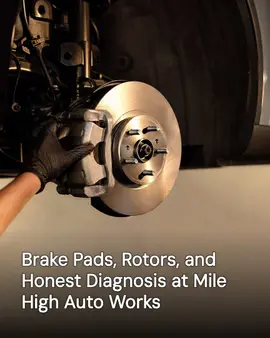
Mile High Auto Works Piston pressed back, new rotor on the hub, torque wrench clicking at 85 ft-lbs. That's the moment a brake job goes from "parts on a bench" to "done right."
Auto repairGenerated
The brake and tire rack
A gloved hand fitting a new rotor on the hub, the torque wrench at the click. The photo shows the part and the work, never a customer, so there is no consent to collect and no plate in the frame.
Mile High Auto Works
Demo brand
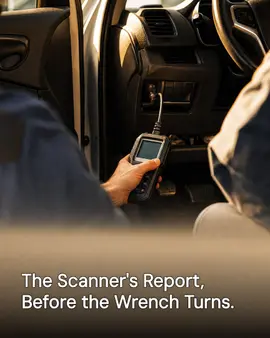
Mile High Auto Works The screen in the passenger seat is showing live data from your engine. Coolant temp. Fuel trims. O2 sensor voltage.
Auto repairGenerated
The diagnostic bay
A technician holding the scanner while the screen shows live engine data. The post makes a diagnosis visible the way the diagnostic-bay ideas on this page describe, with no before-and-after claim attached.
Mile High Auto Works
Demo brand
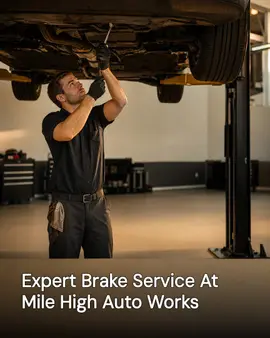
Mile High Auto Works Expert technicians, top-tier tools, and a well-organized bay - that's what you'll find at Mile High Auto Works.
Auto repairGenerated
The lift bay
A technician with a car raised on the lift, the underside the customer never sees. The caption names the shop, not a result, so the post shows the work without promising what it fixed.
Every idea on this page is something a person can make in an afternoon with a phone. The part a tool can take is the repetitive half: turning the week's jobs and the brand's own voice into drafted captions, images and a short video, on schedule, with you approving each one before it goes out.
A free account includes one campaign a week, every week, which comes to 12 posts, 4 videos and 4 cross-posts a month, plus 300 credits refilled monthly and no credit card.
The work, bay by bay: the car on the lift, the old pad next to the new one, the scan screen, the oil draining, the mileage reminders, and the before-and-after with the customer's consent. All twenty-seven are grouped by the bay they are shot in on this page, so a tech can shoot them standing where they already work.
Two or three times a week is enough, and it beats a page that only wakes up when the bays are empty. A busy week produces more posts than you can use, so shoot in the busy weeks and schedule into the quiet ones. The free plan of SpeedRun Social is one free campaign a week (3 posts, 1 video, 1 cross-post), 300 credits a month refilled forever, no card, and watermarked media on free.
Yes, and the time to get it is drop-off, before the car goes on the lift. Ask once, remember who said no, and keep the license plate out of frame regardless. A repair is a customer's expense, and the before-and-after ideas on this page each carry a consent line so the rule travels with the idea.
Facebook first, because that is where a stranded driver's neighbor asks for a shop. Instagram is where you show the finished car and the clean bay after; Facebook is where the recommendation happens, and the two feeds can carry different posts from the same week of work.
Yes, and it is the single most useful post a shop has. The worn pad next to the new one, the cracked belt, the brown coolant in a clear cup: the pair answers the upsell question without a word of persuasion, because the customer can see the old part was finished.
A customer's plate, a part that has not been replaced, a caption that invents a diagnosis or a price, or a scare photo meant to frighten someone into a repair. Trust is built from real work, and one careless post spends it faster than a good one earns it.
The photos still have to be taken in the bay, but the captions and the scheduling can be handed over. SpeedRun Social builds a week of posts from a shop's own services and photos and holds them for approval before anything publishes. The free plan is one free campaign a week (3 posts, 1 video, 1 cross-post), 300 credits a month refilled forever, no card, and watermarked media on free.
One campaign a week is included free, forever, with 300 credits refilled monthly and no credit card. Approval stays on until you switch it off.