Post ideas, one line each

12 social media posts for coffee shops, each with a ready caption

Twelve posts you can pull from the day the shop already runs, each with a one-line example caption, then the weekly rhythm they slot into, the phone shots that make them, and the three habits that quietly empty a feed.

A coffee shop posts the pour, the room, the regular's usual and the drink of the season, three or four times a week, aimed at the afternoon rather than the rush. The shop's best material is the day it already runs, and the phone on the back counter is the whole kit. Below are twelve posts, each with a one-line caption you can post as written.

Read it top to bottom. The twelve posts are the menu; the weekly rhythm is the week they slot into; the phone shots are the only kit you need; and the three mistakes are the habits that empty a feed one post at a time. Every caption is an example, written so you can swap the drink, the name and the day and send it.

Twelve posts, one line each

Each caption below is an example, written so you can swap the drink, the name and the day and post it as is. The idea is the part that is yours; the sentence is already drafted.

  1. The first pull, before the door unlocks

    The grinder dialing in, the empty room, the machine warming up. The opening routine is the one post the rush crowd never sees, because they arrive after it is over.

    Example caption

    Six forty-five, grinder dialed in, room still quiet. We open in fifteen.
  2. The pastry case, full before the rush

    Shot straight on at counter height before the first scone moves, while the glass is clean and every tray is full. The case is the shop's best still life, and it only looks like this for about an hour.

    Example caption

    The case is full: blueberry scones, morning buns, and one tray of cinnamon rolls out of the oven.

  3. This week's roast, named

    The bean or blend on the grinder right now, introduced with a tasting word or two, so a regular knows what changed and a stranger has something to order.

    Example caption

    This week's espresso is a washed Ethiopian: citrus up front, cocoa on the way out.

  4. The hands behind the bar

    A short, real feature on one person and what they do, so the shop stops being a logo and starts being the people who remember an order.

    Example caption

    Marco has pulled our espresso for three years. He knows the regulars' orders before they reach the counter.

  5. What is actually in your cup

    One signature drink, broken into its three ingredients, so a stranger can picture ordering it without having to ask what is in it.

    Example caption

    The honey lavender latte is two shots, local honey, and steamed milk. That is the whole recipe.

  6. The room, rearranged

    A before-and-after of the space, the day you move a table, add a plant or change the seating, so regulars notice and strangers see a shop that is alive.

    Example caption

    We moved the corner table into the window. Same outlet, better light.

  7. The block you will find us on

    The street, the sign, the door, shot from across the way, so a stranger who has never been here knows where to walk and what to look for.

    Example caption

    You will find us between the bookstore and the flower stand, halfway down Main.

  8. The water bowl at the door

    The small sign that the shop is dog-friendly, posted once so the four-legged regulars and their people know they are welcome before they even ask.

    Example caption

    Water bowl is out and the door is open to the four-legged regulars.

  9. New here? How to order

    A friendly first-timer's guide, answering the questions nobody wants to ask out loud, so a first visit goes smoothly and the line keeps moving.

    Example caption

    New here? Order at the counter, grab a number, and the corner room has the outlets.

  10. Rain on the windows

    A timely, atmospheric post for a wet or cold day, selling the warm seat and the quiet room rather than the drink itself.

    Example caption

    Rain on the windows, the machine running, and the seat by the radiator is warm.

  11. Last pull of the day

    The closing routine, the counter wiped and the chairs up, so the feed ends the day the way the shop does and the regulars know the hours.

    Example caption

    Last pull of the day, counter wiped, chairs up. Same time tomorrow.

  12. The community board

    The flyer board with this month's local events, so the shop reads as part of the neighborhood rather than a stop on the way through it.

    Example caption

    This month's board: the farmers market Saturday, open mic Thursday, and a neighborhood cleanup Sunday.

Two of these, finished

Two of the twelve, as the generator turned them out for a demo shop. Both cards are marked as a demo brand, not a customer, and both captions are the ones the ideas above are built from.

Chicory Bend Coffee

Demo brand

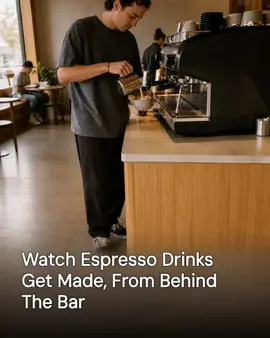
Generated post: barista steaming milk into a cup at the espresso machine, headline about watching espresso drinks get made baked into the image

Chicory Bend Coffee What does it actually look like when someone's pulling your shot?

Generated

Chicory Bend Coffee

Demo brand

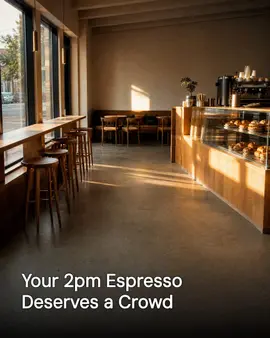
Generated post: warm empty cafe interior in afternoon light with a pastry case, headline about the 2pm espresso crowd baked into the image

Chicory Bend Coffee Right now the corner room is open, quiet, and warm. You get a seat by the window.

Generated

Each card is marked "Demo brand": a business we built ourselves to show the trade, with the headline baked into the image by the generator. It is not a customer, and the demo shop is not a real cafe you can visit.

The simple weekly rhythm

One video, three photo posts, and one cross-post, spread across the week so the feed never asks for a day the shop does not already have.

DayPost
MondayThe video: the pour, shot from the barista's side, no music, ten seconds.
TuesdayA photo: the pastry case, full before the rush.
WednesdayThe cross-post: the hours, the board, or the afternoon offer, sent to the map.
ThursdayA photo: this week's roast, named.
FridayA photo: the room in afternoon light, or the regular who said yes.
SaturdayThe overflow: only if something real happened, like rain or a sold-out tray.
SundayOff. Or a quiet photo if the week left a gap.

What to photograph with a phone

The phone already on the back counter is the whole kit. These five shots cover the twelve posts above, and none of them needs a second person or a production day.

The pour, from the barista's side

Prop the phone on the back counter, start it before the milk goes in, and let it run ten seconds. No music, no narration.

The room in afternoon light

A few tables filled and daylight still in the windows. An empty cafe reads as closed, a packed one reads as noise.

The pastry case before the rush

Shot straight on at counter height before the first scone moves, while the glass is clean and the tray is full.

The hands, mid-motion

Tamping, steaming, or pouring. Hands do more work than faces and never need a release form.

The outside, from across the street

The sign, the door, and one or two people. The shot that tells a stranger where the door is.

Three mistakes that empty the feed

None of these costs money to fix; each one is just a habit that points the camera or the caption at the wrong thing.

  1. Treating the feed like a menu board

    A feed where every post is a drink name and a price reads like a catalog, and a stranger already has a menu; they are choosing a place to sit, not a beverage. Show the room, the light, and the person making it, and let the price live on the board where it belongs.

  2. Filming the rush and skipping the afternoon

    The line out the door photographs as noise; nobody saves a photo of a queue. The afternoon, when the room is quiet and a post could actually fill a seat, is the part of the day the phone misses because nobody is there to point it. Aim one post a day at the slow hours instead of the busy ones.

  3. The caption that names nothing

    A gorgeous pour captioned with one emoji gives a stranger nothing to act on: no drink name, no neighborhood, no reason to walk in. The shop name is on the door and the hours are on the map, but the caption is where a scrolling stranger decides, so it has to carry the one fact that turns a like into a visit.

The free weekly campaign and the rest of the week

SpeedRun Social turns the twelve ideas above into a scheduled week: it reads your website into a brand kit, writes each caption in your voice, generates the image around your shot, and books the days. The free weekly campaign covers Monday through Friday in the rhythm above, so the free plan is 300 credits a month refilled forever, one free campaign a week (3 posts, 1 video, 1 cross-post), no card, watermarked media on free. Paid plans are $49.99, $99.99 and $199.99 a month. Every post waits for your approval.

The pour still has to be filmed by the person holding the phone. What the tool takes off your afternoon is the writing, the scheduling, and the good shot stuck in the camera roll because nobody had a sentence for it.

Questions coffee shops ask about posting

  • What should a coffee shop post on social media?

    The pour, the room, the regular who said yes, the drink of the season, and the afternoon offer. The twelve posts above all come from the day the shop already runs rather than a production day, and each one carries an example caption you can post as written.

  • How often should a coffee shop post?

    Three or four times a week, at a pace one person can hold from behind the bar. The rhythm above maps it to the week: one video, three photos, and one cross-post to the map, with the weekend left open for whatever actually happens.

  • Do I need a photographer or a proper camera?

    No. The phone already on the back counter is the whole kit: a clean lens, a propped-up phone near the machine, and daylight. The five shots in the phone section above are all handheld jobs, and none of them needs a second person or a production day.

  • Can I post customers and regulars without asking?

    Ask first, every time, and take a no without argument. Most regulars say yes to a drink and a first name, but a face or an order that goes up without permission can cost you a customer who felt used. Keep it to the drink and the yes, and leave names out unless they offered.

  • What time of day should a coffee shop post?

    Aim the posts at the afternoon, when offices are deciding on a second coffee and the room is the thing a post can still fill. The morning crowd was coming anyway; the two o'clock room is the one a caption can move.

Shoot one pour this week

Take the pour, the pastry case and the room, and let the captions be written for you. Every post waits for your approval until you switch that off.