Post ideas · Plumbers

32 plumbing social media post ideas, by job and by month

A slab leak soaks a living room floor at midnight. The homeowner opens Instagram while the plumber who will fix it is asleep. This page holds 32 plumbing social media post ideas: 20 sorted by how the job came in, 12 by month, each with the photo to take and the first line to write.

None of these need a studio, a script, or a marketing person. Each idea is a photo you can take with the phone in your pocket and a caption starter you can finish in your own words. Read the two rules once, then treat the rest as a menu you pull from all month.

How to use the two halves

The first twenty ideas are sorted by the way the call arrived: emergency, scheduled repair, install, or maintenance plan. A dispatcher can match today's ticket to a post before the truck rolls back to the shop. The twelve after them are keyed to the month, one idea each, so the weeks with no camera-worthy job still have something worth posting.

Two rules cover every idea on this page. Ask the customer before you photograph anything inside their home, and keep out of the frame whatever identifies them: an address, a family member, a piece of mail, a name on a work order. The mechanics of making that phone shot look clean live in their own post, phone photo tips for trades.

Emergency calls: 5 posts

The after-hours and same-day calls: a burst supply line, a backed-up main, no hot water, a failed shutoff, a sewage backup. These run the day of the job, while the relief is still on the customer's face.

The burst supply line we shut down this morning

Phone photo: the split in the old supply line, held next to the new braided one, with the shutoff valve in the frame. Keep the customer's floor and any family photos out of the shot. Caption starter: "This line failed at the crimp, not at the fitting. We shut the water, cut the bad section, and put a braided line back in its place."
The backed-up main, cleared before it reached the house

Phone photo: the root mass or grease plug pulled from the line, laid on a drop cloth beside the cleanout, the drain machine in the background. Keep house numbers and the customer out of frame. Caption starter: "The main was backing up because of this. Pulled it, cleared it, and ran a camera to confirm the line is open."

No hot water at six in the morning: what we found

Phone photo: the failed heating element or the dead thermostat with your meter on it, next to the new part, before the cover goes back on. Keep the breaker label legible only as far as what it feeds, nothing identifying. Caption starter: "No hot water this morning turned out to be a failed lower element. Swapped it, and the tank was back to temperature in an hour."

The shutoff valve that would not close

Phone photo: the old valve in your hand with the handle snapped or the stem corroded, beside the new ball valve, the pipe ends capped in the background. Keep the customer out of frame and any address label out. Caption starter: "The shutoff under this sink had not been turned in years, and when it mattered it would not close. A ball valve went in, and now the water can actually be stopped."

The sewage backup, stopped before it spread

Phone photo: the stoppage point once the line is open, or the rag and wipes that came out of the cleanout, shown on a tarp outside. Keep any interior mess out of the shot, and never show the customer. Caption starter: "A sewer backup is the call nobody wants to make. We found the blockage, cleared it, and flushed the line clean before it reached the living space."

Scheduled repairs: 5 posts

The booked repairs, the ones with a date on the calendar instead of a panicked phone call. These run a day or two after the job, when the photo can be framed without the pressure of an emergency.

The running toilet, rebuilt in twenty minutes

Phone photo: the old flapper and fill valve laid out beside the new ones, the tank lid off in the background so the inside of the tank is visible. Keep the customer out of the shot. Caption starter: "A toilet that runs all night is usually a worn flapper or a failing fill valve. Rebuilt the whole tank in twenty minutes, and the water bill gets a break."

The disposal that had finally had enough

Phone photo: the old disposal on the floor beside the new one, the wrench still in the mounting ring, shot under the sink with a work light. Keep the cabinet contents out of frame. Caption starter: "The old disposal was ten years old and locked solid. New one is in, wired, and quieter than the dishwasher. If yours hums but will not turn, the reset button is under the unit."

The angle stop that dripped behind the toilet

Phone photo: the corroded old angle stop in your hand beside the new quarter-turn one, a towel on the floor catching the last drops. Keep the wall and floor clean enough to read. Caption starter: "A slow drip behind the toilet rots the subfloor before you ever see it. This angle stop had been weeping for months. A quarter-turn stop is in, and the floor stays dry."

The water hammer, silenced

Phone photo: the arrestor installed on the washing machine valve, or the old fitting beside the new one, with the supply line in frame. Keep the customer's laundry out of the shot. Caption starter: "That bang when the washing machine shuts off is water hammer, and it rattles every joint in the wall. An arrestor absorbs the shock, and the pipes run quiet."

The camera found what the snake kept missing

Phone photo: the camera screen showing the break or the bellied section, with the depth reading visible, the monitor set on a drop cloth. Keep the customer and the house exterior out of frame. Caption starter: "The drain kept slowing every few weeks, and the snake kept coming back clean. The camera showed a belly in the line holding water. Now we know exactly where to dig, instead of guessing."

Installs: 5 posts

Installs read as a story because there is always a before. Each of these names what was there before the new thing went in, which is the one line that makes an install post land.

From a 15-year-old tank to a tankless on the wall

Phone photo: the old tank on the curb next to the new wall-mounted tankless, or the empty space where the tank stood with the new unit above it. Keep the customer out of frame. Caption starter: "The old tank was fifteen years old and on its second element. The new tankless hangs on the wall where the tank used to stand, and the water heats on demand instead of sitting all day."

The water softener that stopped the scale

Phone photo: the new softener in place with the bypass valve, beside the old one or the empty hookup, the salt bag in the foreground. Keep the customer out of frame. Caption starter: "Hard water was scaling the fixtures and eating the water heater. The old softener had been unplugged for a year. The new one is plumbed in, the bypass is set, and the scale finally stops."

The repipe: copper out, PEX in, in one day

Phone photo: the old corroded copper with the pinhole in it, laid beside a coil of new PEX, on the bench or the tailgate. Keep the customer out of frame. Caption starter: "The house had a third pinhole leak in two years, so the copper had to go. We repiped the supply lines in PEX in a day, and the water runs clean and quiet."

The sump pump that now has a second chance

Phone photo: the new pump in the pit with the backup battery on the wall beside it, the old pump sitting on the floor. Keep the customer out of frame. Caption starter: "The old pump was single and the pit filled during the last storm. A new primary pump and a battery backup are in, so the basement stays dry even when the power goes out with the rain."

The rough-in, before the walls hide it

Phone photo: the new supply lines and drain stubbed out of the wall or floor, the fitting layout visible, before the drywall goes up. Keep any identifying paperwork out of frame. Caption starter: "This is the part nobody sees after the tile goes in: the supply lines and drain stubbed out, level, and pressure-tested before the walls close over them."

Maintenance plans: 5 posts

The maintenance-plan visits, the scheduled checks that explain what a plan visit actually does without selling one. These answer the question nobody asks out loud: what do you even do on a maintenance visit?

The anode rod, checked before it was gone

Phone photo: the anode rod pulled from the tank, the sacrificial metal eaten down, beside a new rod, on a drop cloth. Keep the customer out of frame. Caption starter: "This rod is the part that rusts so your tank does not. Pulled it on a maintenance visit, saw it was nearly spent, and put a new one in before the tank started eating itself."

What came out of the water heater

Phone photo: a clear bucket of the flushed sediment, the hose running to a drain, the tank in the background. Keep the customer out of frame. Caption starter: "A water heater that never gets flushed builds up sediment that pops and bangs when it heats. This is what came out of a tank we flush on the plan. The noise stops, and the tank lasts longer."

The whole-house shutoff, exercised

Phone photo: the main shutoff valve being turned, a hand on the handle, the meter in frame with no numbers legible. Keep the customer out of frame. Caption starter: "The most important valve in the house is the one that stops everything, and most people have never touched it. We turn it once a year on a maintenance visit so it actually turns when it matters."

The backflow test, passed

Phone photo: the backflow preventer with the test gauge attached, the tag or sticker visible, the device mounted on the wall or at the meter. Keep the customer out of frame. Caption starter: "A backflow preventer keeps irrigation water from flowing back into the drinking supply, and it has to be tested every year to stay certified. This one passed."

The hose bibs and supply lines, checked one by one

Phone photo: a hose bib being turned by hand, or the braided supply lines under a sink being inspected, one line held up to the light. Keep the customer out of frame. Caption starter: "A maintenance visit checks every hose bib and every supply line in the house, because those are the parts that fail quietly and flood a room while nobody is home."

One idea for every month

Twelve ideas keyed to the month, one each, for the weeks the camera stayed in the pocket. The month names the household rhythm; the idea is the thing a homeowner is already thinking about that month.

January: the new-year plumbing checklist

Phone photo: a checklist written on the shop notepad, or the water heater and the shutoff valve side by side, the items ticked off. Keep anything personal out of frame. Caption starter: "New year, same pipes. Five things to check in January: the water heater age, the shutoff valves, the supply lines under the sinks, the sump pump, and the hose bibs."

February: leak week, and the supply lines to check

Phone photo: a supply line or a p-trap with a drip under it, a paper towel beneath to show the leak, or your finger pointing at the dripped fitting. Keep the customer out of frame. Caption starter: "February is the month small leaks show themselves. Walk the house and check under every sink, behind the toilet, and around the water heater. A drip you find now is cheaper than the one that finds you."

March: World Plumbing Day is the 11th

Phone photo: the crew or the truck with the doors open and the tools laid out, on the 11th. Keep the customer out of frame. Caption starter: "March 11 is World Plumbing Day, which is as good a day as any to say it: clean water and working drains are the quiet plumbing that keeps a house healthy. That is what we do all year."

April: deep-clean the slow drains

Phone photo: a slow drain being cleared, or the hair and buildup pulled from a p-trap, laid on a towel. Keep the customer out of frame. Caption starter: "April is a good month to deep-clean the drains before the heavy-use months arrive. Pull the p-traps, clear the slow ones, and run hot water through the kitchen line. Slow drains are the only kind that get worse on their own."

May: turn the hose bibs on, carefully

Phone photo: a hose bib being turned on slowly, a hand on the handle, the hose attached but not yet spraying. Keep the customer out of frame. Caption starter: "First time turning the hose bib on this year? Go slow, and check where the bib meets the wall. A freeze crack there only shows itself once the water is back on."

June: the vacation shutoff

Phone photo: the main shutoff being turned, or the washing machine hoses being disconnected, a hand on the valve. Keep the customer out of frame. Caption starter: "Leaving town? Turn off the washing machine supply lines and the main if you can. The leak that happens while the house is empty is the one that costs the most."

July: outdoor spigots and irrigation backflow

Phone photo: an outdoor spigot running into a bucket, or the irrigation backflow preventer with the test tag on it. Keep the customer out of frame. Caption starter: "July is when the outdoor water runs all month. Check the spigots for drips and the irrigation backflow for its test date, because the water that goes to the lawn should never come back into the house."

August: the back-to-school water heater load

Phone photo: the water heater with its age label visible, or a shower head and a washing machine in the same frame, the point being two things at once. Keep the customer out of frame. Caption starter: "When school starts, the morning rush hits the water heater all at once: showers, breakfast, laundry. If the tank is over ten years old, this is the month it shows."

September: the water-use audit

Phone photo: a water meter reading with the numbers legible, or a notepad with the reading written down next to the meter. Keep the customer out of frame. Caption starter: "A water-use audit is one reading, twice, a week apart. If the number climbs while nobody is home, something is leaking. September is a good month to take the first reading."

October: disconnect the hoses

Phone photo: a hose being unscrewed from the bib, the bib drained, the hose coiled on the ground. Keep the customer out of frame. Caption starter: "Before the first hard freeze, disconnect the hoses and drain the bibs. A hose left on holds water against the valve, and that water freezes and cracks the pipe inside the wall."

November: the Thanksgiving disposal rules

Phone photo: a plate of potato peels and celery strings beside the disposal, or your hand pointing at the disposal with the cover off. Keep the customer out of frame. Caption starter: "Thanksgiving is the day the disposal meets its match. No potato peels, no celery strings, no bones, no grease. Run cold water before and after, and let the water carry it down."

December: holiday guests and the water heater

Phone photo: the water heater with the temperature dial visible, or a shower head with a bucket under it, or the tank with a note about its age. Keep the customer out of frame. Caption starter: "A house full of guests means the water heater works triple shifts. Turn the tank up a notch, stagger the showers, and if the tank is old, this is the week it quits."

What these look like finished

Three posts generated for the demo brand Copperline Plumbing, not a client, each paired with the idea on this page it belongs to.

Copperline Plumbing

Demo brand

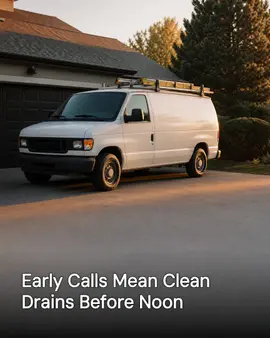
Generated post: a plain white service van with a roof ladder rack parked in a residential driveway at golden hour, headline about early calls meaning clean drains before noon baked into the image

Copperline Plumbing Van's loaded and we're heading out before sunrise. Drain machine, water heater tools, leak detection kit, shop towels, drop cloths.

PlumbingGenerated

Emergency calls: post 1

The van loaded and out before sunrise is the emergency-call post made real: no customer, no address, no job in progress, just the readiness a midnight caller is looking for. The caption lists what is on the truck, which is the trust move.

Copperline Plumbing

Demo brand

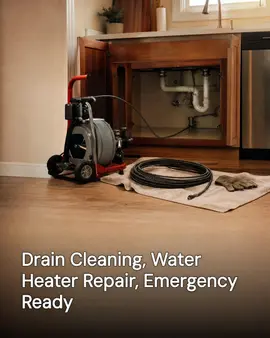
Generated post: a drain-cleaning cable machine and coiled cable resting on a towel in front of an opened kitchen sink cabinet with a small tray of tools laid out beside it, headline about drain cleaning, water heater repair and being emergency ready baked into the image

Copperline Plumbing Most people think drain cleaning is just about muscle and luck. Not really. It's about having the right machine staged, the cables prepped, everything laid out clean on a drop cloth before we even touch your sink.

PlumbingGenerated

Scheduled repairs: post 5

A drain machine staged on a drop cloth in front of an open cabinet is the slow-drain repair post made real: the tool laid out clean before the cable goes in. No customer, no mess, no identifying detail.

Copperline Plumbing

Demo brand

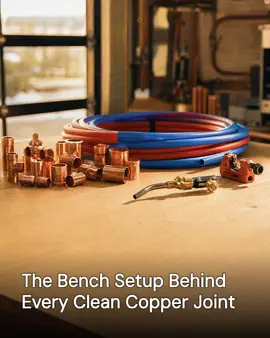
Generated post: copper fittings, coiled red and blue PEX tubing, a brazing torch and a pipe cutter arranged on a wooden workbench in a plumbing shop, headline about the bench setup behind every clean copper joint baked into the image

Copperline Plumbing Copper fitting, PEX tubing, torch, pipe cutter, solder. All staged on the bench before the first joint gets heated. This is the setup that keeps water from leaking where it shouldn't be leaking.

PlumbingGenerated

Installs: post 3

Copper fittings, PEX coils, a torch and a pipe cutter staged on the bench is the repipe install post made real: the before-the-first-joint setup that keeps a repipe from leaking. No customer, no house number, just the work about to happen.

Where SpeedRun Social fits in

Every idea on this page is something a person can make in an afternoon with a phone. The part a tool can take is the repetitive half: turning the week's jobs and the brand's own voice into drafted captions, images and a short video, on schedule, with you approving each one before it goes out.

A free account includes one campaign a week, every week, which comes to 12 posts, 4 videos and 4 cross-posts a month, plus 300 credits refilled monthly and no credit card.

Questions people ask about this

  • What should a plumbing company post on social media?

    The job it did this week, shot while it was still open: the burst supply line, the camera finding, the old water heater on the curb next to the new one, the anode rod pulled from the tank. The 32 ideas on this page are sorted by how the call came in and by month, and every one is a phone photo plus a caption starter, so the list doubles as a shooting list.

  • How many plumbing social media posts do I need a month?

    Enough that a homeowner who lands on your page sees a live business, not a profile that has not moved since 2019. Four a month is a floor a one-truck shop can hold, and the twelve monthly ideas on this page cover it. If you want the writing handed over, the free plan of SpeedRun Social builds one free campaign a week (3 posts, 1 video, 1 cross-post), with 300 credits a month refilled forever, no card, and watermarked media on free.

  • What plumbing Facebook posts get the most engagement?

    The ones that name a problem the reader has heard or smelled but cannot name: the running toilet, the banging pipes, the slow drain, the water heater that pops. A photo of the failed part next to the new one, with a plain caption, gets saved and shared because it teaches the reader to check their own house. The emergency and scheduled-repair sections on this page are that kind of post.

  • Can I post photos from a customer's house?

    Only with the customer's permission, asked before the phone comes out, and with anything identifying left out of the frame: no address, no family, no mail, no name on a work order. The two rules stated in the how-to section of this page cover every idea. A customer who says yes to a photo of the repair is saying yes to that photo, not to a tour of their home.

  • What do I post when we have no interesting jobs this week?

    The twelve monthly ideas at the bottom of this page, because they need no job at all: the January checklist, the vacation shutoff, the water-use audit, the hose disconnect. Every one is a photo you can stage in the shop or at your own house in ten minutes. A slow week is when those posts get made, not skipped.

  • Should a plumber post prices on social media?

    You can, but a price without the job behind it reads as a number, and a price on the wrong job gets screenshotted and quoted back at you later. What earns trust is the before and after that explains what the work actually was. If you do post a price, make it a range for a named job, not a number invented for the feed.

  • Do I need to post every day for it to work?

    No, and posting every day is usually the fastest way to run out of material and go quiet, which reads as closed. A steady one or two posts a week for a year beats a burst and then silence. The 32 ideas on this page are a menu, not a schedule: pull one when the job happens, and use the monthly ideas to fill the gaps.

Turn one week of jobs into one week of posts

One campaign a week is included free, forever, with 300 credits refilled monthly and no credit card. Approval stays on until you switch it off.