Post ideas · Landscapers

Landscaping social media: 20 post ideas and a zone calendar

Four hundred unposted jobsite photos sit on the crew lead's phone, and the page they feed gets one finished-yard shot a month. Landscaping social media is one project told three times, before, during and after, plus a monthly calendar that follows the yard instead of the holiday. Here are 20 post ideas and 12 months of that calendar.

Every idea below can be shot on a phone between jobs. Two rules run under all of them: get the homeowner's yes at the estimate, and keep the house number and the street out of the frame and out of the caption.

Why one project beats one hundred afters

An after on its own is a pretty picture, and pretty pictures sell nobody. The reader who sees only the finished yard cannot tell what you changed, so the work reads as a claim instead of proof. A matched before and after is the same two photos with the starting point in front, and that is the difference between a gallery and an argument.

The during is the post nobody else makes. The competitors posting finished patios never show the gravel base or the drainage stone, because they are not proud of the part the homeowner never sees. Show the base, the backfill, the cap, and you have posted the reason the price is the price, in four frames a shortcut would skip.

Two rules run under every idea on this page. Get the homeowner's yes at the estimate, before the before photo exists, and record it. Keep the house number and the street name out of the frame and the caption, because a yard is identifiable without either, and a before that embarrasses an owner about the state of their yard is off limits too.

One project, told in three posts: 6 ideas

Two ideas per stage. The before shows the problem, the during shows the work, the after shows the proof; together they are one story a homeowner can follow from the estimate to the finished yard.

The standing-spot before, with the crew's read of the problem

Shoot the before from the spot the homeowner stands when they walk out the front door, before anyone unloads. In the caption, name what the crew saw first: the grade that pools water, the bed that drains onto the walk, the slope the mower scalps. The read turns a photo of a yard into a diagnosis.

Before you postGet the homeowner's yes at the estimate, and keep the house number and the street name out of the frame and the caption.

The estimate-day walk, with the homeowner's question as the caption

Walk the property with the homeowner and write down the one question they actually asked: where the water goes, why the grass thins, how much the wall will cost. Post a photo of the spot with that question as the caption, answered in two sentences. It reads like the conversation they already had with you.

Before you postThe homeowner's question goes in the caption only if they are fine with it; paraphrase, and never name them or the street.

Base, block, backfill, cap: the four-frame cross-post

Four photos of the same retaining wall across the job: the gravel base with a level on it, the first course of block, the drainage stone behind it, the cap course going on. The four frames explain why the price is the price better than any finished photo can, because each one shows a step a shortcut would skip.

Before you postShoot from the same spot each time so the frames read as one build, and keep the address out of every frame.

The crew mid-job, first name and the tool in their hand

A photo of the lead mid-task, named in the caption: first name, what they are doing, how long they have done it. The tool in their hand does the talking; the name does the rest. A homeowner hires a person, and this is the post that puts one in front of them.

Before you postAsk the crew member before you post them, and get the same yes you get from a homeowner. No one on the crew is posted by default.

The same-spot after, one week later

Return to the standing spot a week after the job settles and shoot the after from the same position, same height, similar time of day. The caption names what changed in one line and what is underneath in another. A matched pair shot a week apart is the proof an estimate conversation needs.

Before you postWait until the work has actually settled; fresh mulch and new plantings hold their look for a few days, and the after is only honest once the bed is done.

The 20-second walkthrough that points at what is underneath

Twenty seconds of video walking the finished job, pointing at the joints, the pitch for drainage, the base you cannot see. The camera says what the invoice cannot: what is underneath the pretty part, and why it will still be there in five years.

Before you postPoint at the work, not at the house: keep the camera on the ground and the wall, and never pan across the front door or the number.

Hardscaping posts: patios, walls, walkways, 6 ideas

Hardscaping is its own trade and its own feed: the scale and the cost argument are the post. These six are written for a two-truck company with a phone at grade, not a drone.

The base depth shot, tape in frame

A photo of the excavation with a tape measure dropped in it, showing the depth of the gravel base. The caption says what that depth is for: frost, drainage, and a patio that does not sink. The tape is the whole point; a number in a photo beats an adjective in a caption.

Before you postShoot before the stone goes in, and keep the tape readable; a blurry number teaches nobody anything.

The pattern laid dry before it is set

Lay the pavers out dry in the pattern before any of them are set, and photograph the whole field from a ladder or a tailgate. The caption names the pattern and why it was chosen for this yard. It lets a homeowner see the design before the joints lock it in.

Before you postNo finished claim yet: this is a dry lay, and the caption should say so rather than presenting it as the finished patio.

The drainage stone behind the block

A photo of the back of a retaining wall mid-build, showing the drainage stone and the pipe behind the block. The caption says what the stone does: it keeps water from pushing the wall over, which is the failure a homeowner never sees until it happens.

Before you postThis is a structural photo, not a beauty shot; keep it accurate and do not stage it with finished stone that is not actually there.

The cap course going on

A photo of the cap stones being set along the top of a wall, adhesive in frame, a level across two caps. The caption explains what the cap does: it finishes the wall and keeps water out of the top course. It is the last step, and it makes the wall look done.

Before you postWait until the caps are actually set and level before you post; a cap course mid-glue reads as a job half finished.

The string line and the first paver

A photo of the string line stretched across the walkway with the first paver set to it. The caption says what the string is for: a straight line and a consistent slope. It shows the work starts from a plan, not from a guess.

Before you postKeep the string line and the level in frame; that is the honesty of the shot.

The edge restraint nobody sees

A photo of the edge restraint going in along the outside of the walkway, before it is buried. The caption says why it matters: it is what keeps the pavers from spreading apart over the years. It is the invisible step, and the post exists to make it visible.

Before you postShoot it before it is covered; once the restraint is buried the shot is gone, and so is the post.

Lawn care Facebook post ideas: 8 ideas

Lawn care lives on Facebook, because the people who hire you ask for recommendations in neighborhood groups. These eight are written for that reader, and each names the Facebook behavior that makes it travel.

The route-day post: which streets, which day

Post a short note on the days you work each neighborhood: which streets, which day, what time to put the dog in. It gets shared into the neighborhood group by a neighbor, because it is useful to the whole street and costs you nothing.

Before you postShare it to the neighborhood group you are already in; a route post in a group travels, and one on your page alone does not.

The height-of-cut explainer

One photo of the mower deck with the height setting, and a caption on why the grass stays at that height: taller grass shades its own roots and holds water, scalping invites weeds. It teaches a homeowner to tell good mowing from a fast job.

Before you postPost your real height for the season; a height that is not what you actually cut is a promise the lawn will not keep.

The 'is my lawn dead' dormancy reply

Screenshot the question everyone asks in the heat or the cold, and answer it as a post: brown does not always mean dead, and here is how to tell. A photo of the lawn with a close-up of the crown does the explaining. It stops the worried search in its tracks.

Before you postAnswer it as the page, in the comments, and pin the post; a reply in the thread reaches the person who asked, and the pin reaches everyone after.

The mowing-stripes photo, with the how

A photo of the stripes you just cut, with the how in the caption: the roller, the overlap, the pattern. Stripes are the one lawn photo a neighbor will screenshot and ask about, because everyone wants the lawn that looks like a ballpark.

Before you postShoot it fresh, the day it is cut, before the light goes flat; stripes are a same-day photo or they are not stripes.

The first-mow-of-spring timing

Post when the first mow is actually coming in your area, with the height and the reason you do not scalp it. It lands in the week every lawn on the street wakes up, and it is the one a neighbor saves for the month the grass returns.

Before you postTime it to your area's weather, not to a calendar date; a first-mow post two weeks early reads as wrong to the neighbor looking at snow.

The watering-in-numbers post

One inch a week, all at once, in the morning: the honest starting line, with a tuna can or a straight-sided cup as the measuring trick. Explain deep versus frequent in two sentences. It is the post that gets saved all summer and sent to the neighbor who asked.

Before you postKeep the numbers to what actually holds in your area; watering advice that ignores your climate is the one post that reads as generic.

The aeration plug in a hand

A photo of a core plug held up between two fingers, and a caption on what the holes let in: air, water, seed to soil. Name why fall or spring is the window in your zone. It turns a word homeowners have heard into something they can picture on their own lawn.

Before you postShoot a real plug from a real job, not a stock image; the plug is the whole proof.

The answer-a-comment post: screenshot the question, answer it as a post

Take the best question a homeowner asked in a comment or a message, screenshot it with the name covered, and answer it as a full post. It turns a one-to-one answer into a one-to-many post, and it never runs out of material.

Before you postCover the asker's name and photo before you screenshot, and answer as the page so the post stands on its own.

What to post each month, by growing zone

Twelve months, three zone bands each, keyed to what the yard is doing rather than the holiday. Zones 3 to 5 freeze and wait, zones 6 to 7 swing between seasons, and zones 8 to 10 grow nearly year round. Find your band and read your line; the other two are the same month two states away.

January

Zones 3 to 5: the yard is asleep under snow, so post the design sketch for spring's first build and the before photos you already hold. Zones 6 to 7: the lawn is brown but not dead, so post the dormancy explainer and the plan for the year's first project. Zones 8 to 10: the lawn stays green and grows slowly, so post the winter mow height and the pruning calendar.

February

Zones 3 to 5: still frozen, so post the hardscape walkthrough and take deposits on spring builds while homeowners plan. Zones 6 to 7: the first hints of green show, so post the soil test explainer and what to amend before the season opens. Zones 8 to 10: growth picks up, so post the pre-emergent timing and the first weed-pressure warning.

March

Zones 3 to 5: the thaw begins, so post the first-mow timing and why scalping the first cut hurts. Zones 6 to 7: the lawn wakes, so post the first mow, shot before the blades drop. Zones 8 to 10: full growing season, so post the mowing height and the watering schedule that beats the first heat.

April

Zones 3 to 5: spring cleanup, so post the bed edging before-and-after and the mulch depth lesson. Zones 6 to 7: mowing starts in earnest, so post the height-of-cut explainer and the stripe pattern. Zones 8 to 10: the heat arrives early, so post the watering-in-numbers post and the irrigation check.

May

Zones 3 to 5: planting season, so post the plant-of-the-week named, with sun and water each. Zones 6 to 7: the lawn looks its best, so post the mowing-stripes photo with the how. Zones 8 to 10: the first heat wave, so post the deep-versus-frequent watering answer and the aeration window.

June

Zones 3 to 5: install season peaks, so post the finished patio walkthrough and the base-depth shot. Zones 6 to 7: growth is fast, so post the weekly maintenance visit explainer and the irrigation head check. Zones 8 to 10: hot and humid, so post the fungus warning and the mow-higher-in-summer rule.

July

Zones 3 to 5: the yard is full, so post the crew mid-job with a first name and the tool in hand. Zones 6 to 7: peak heat, so post the watering numbers again and the is-my-lawn-dead dormancy reply. Zones 8 to 10: dormancy risk, so post the brown-not-dead explainer and the mowing pause.

August

Zones 3 to 5: summer's last month, so post the retaining wall cap course and the drainage stone shot. Zones 6 to 7: late summer stress, so post the aeration plug in a hand and the overseed plan. Zones 8 to 10: rainy season, so post the drainage check and the edge restraint nobody sees.

September

Zones 3 to 5: first cool nights, so post the aeration and overseed window and the core plug. Zones 6 to 7: aeration season, so post the core plug and what the holes let in. Zones 8 to 10: the second growing season, so post the fall feeding and the re-seed timing.

October

Zones 3 to 5: leaf season, so post the leaf route and the last cut timing. Zones 6 to 7: leaves and final mows, so post the shorter-last-cut rule and the snow-mold prevention. Zones 8 to 10: the best planting window, so post the fall install and the plant-of-the-week again.

November

Zones 3 to 5: the ground hardens, so post the last cut and the winterizer feeding. Zones 6 to 7: the final mow, so post the height setting on the deck and the irrigation blow-out. Zones 8 to 10: growth slows, so post the winter mow height and the leaf cleanup route.

December

Zones 3 to 5: fully dormant, so post the year's best before-and-after pairs and the spring design offer. Zones 6 to 7: dormant but mild, so post the design-season pitch and the hardscape planning walkthrough. Zones 8 to 10: the yard stays green, so post the winter maintenance and the pruning calendar.

What a finished landscaping post looks like

Four posts generated for a demo landscaping brand, not a client, each shown with the section on this page it belongs to.

Bluegrass & Birch Landscaping

Demo brand

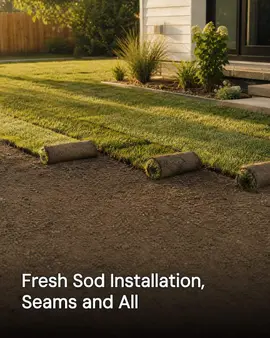
Generated post: fresh sod rolls half unrolled across a freshly prepared residential yard with visible seams and a stack of remaining rolls to the side, a house and landscaped bed in the background, headline about fresh sod installation and visible seams baked into the image

Bluegrass & Birch Landscaping The seams disappear in about three weeks. The prep work underneath is what makes that happen.

LandscapingGenerated

One project, told in three posts: the during stage

Fresh sod half unrolled, seams visible, and the caption says the seams disappear in about three weeks because of the prep underneath. It is the during post: the work is unfinished, and that is exactly why it is believable.

Bluegrass & Birch Landscaping

Demo brand

Generated post: a gloved hand raking fresh dark mulch into a crisp, clean-edged garden bed beside a lawn, with a bed of evergreen shrubs and ornamental grasses behind it, headline about dark mulch and clean bed edges every time baked into the image

Bluegrass & Birch Landscaping A clean edge on the bed is the difference people notice, even if they can't say why.

LandscapingGenerated

Lawn care Facebook post ideas: the clean edge

A gloved hand raking dark mulch into a crisp bed edge, with the caption on the edge being the difference people notice. It works as well in a neighborhood group as on the page, because it names the detail a homeowner would otherwise not see.

Bluegrass & Birch Landscaping

Demo brand

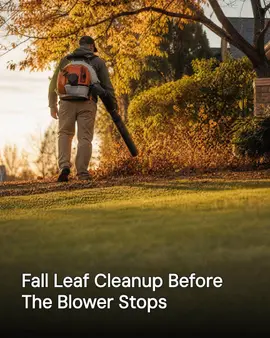
Generated post: the back of one worker in plain work clothing carrying a backpack leaf blower across a residential lawn scattered with fallen autumn leaves, golden-hour light through turning trees, headline about fall leaf cleanup before the blower stops baked into the image

Bluegrass & Birch Landscaping Leaf season means the route runs every week until the trees are done, not just once.

LandscapingGenerated

The calendar: October and November, the leaf route

A worker crossing a leaf-strewn lawn with a backpack blower in golden-hour light, captioned that leaf season runs every week until the trees are done. It is the October and November post for every zone that drops leaves.

Front Range Lawn & Turf

Demo brand

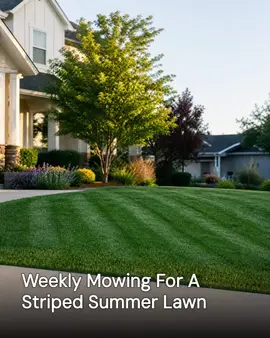
Generated post: freshly mowed front lawn with crisp mowing stripes

Front Range Lawn & Turf People think a perfect lawn is all about the type of grass. But truth is, it's the regular maintenance that makes all the difference.

Lawn careGenerated

Lawn care Facebook post ideas: the stripes

Freshly mowed stripes across a front lawn, captioned that a perfect lawn is regular maintenance rather than a grass type. It is the stripes photo a neighbor screenshots and asks about, and it belongs in the group the same week it is cut.

Where SpeedRun Social fits in

SpeedRun Social drafts the week from your crew's jobsite photos and holds each post in an approval queue; the free plan is one free campaign a week (3 posts, 1 video, 1 cross-post), 300 credits a month refilled forever, no card, watermarked media on free. Paid plans are $49.99, $99.99, and $199.99 a month.

Questions people ask about this

  • What should a landscaping company post on social media?

    One project told three times: the before shot from the standing spot, the during frames of the work, and the matched after. Add the crew with their names and tools, the hardscaping steps that explain the price, and a month by month calendar that follows the yard rather than the holiday. The twenty ideas above are that list.

  • How often should a landscaper post on Facebook and Instagram?

    Two or three posts a week in season, and at least weekly through the winter, is a cadence a two-truck company can hold. Batch a week ahead from the job photos you already have, so a busy week never goes dark. The consistency people notice is monthly, not daily.

  • Do I need the homeowner's permission to post their yard?

    Yes. Ask at the estimate, before the before photo exists, and record the answer. Keep the house number and the street name out of the frame and the caption, even with a yes, because a yard is identifiable without either. A before that embarrasses an owner about the state of their yard is off limits too; show the starting point, not neglect.

  • What do landscapers post in winter when nothing is growing?

    The season you just finished, plus whatever you sell in the cold months. Run the before-and-afters from summer installs, a cross-post walking through a build in stages, the dormancy explainer that answers is-my-lawn-dead, and the design sketches for spring. In warm zones the winter is a slow season, not a dead one; the calendar above gives each zone its month.

  • How is hardscaping social media different from lawn care posts?

    Hardscaping sells the scale and the cost, so the posts show the steps a shortcut would skip: the base depth, the drainage stone, the cap course. Lawn care sells the neighborhood, so the posts are about the route, the height of cut, and the answer to the question the group is asking. Both run on your phone at grade; neither needs a drone.

  • What are good lawn care Facebook post ideas for a neighborhood group?

    The route-day post that says which streets and which day, the height-of-cut explainer, the mowing-stripes photo with the how, and the answer-a-comment post that turns a homeowner question into a public answer. Each one travels because it is useful to the whole street, not just to the person who asked.

  • Can AI write landscaping social media posts from my crew's photos?

    It can draft them, and the captions, around the photos you already take. SpeedRun Social builds a week from your jobsite photos and holds each post in an approval queue before anything publishes. The free plan is 300 credits a month refilled forever, one free campaign a week (3 posts, 1 video, 1 cross-post), no card, watermarked media on free; the photos still have to be taken on site, because that is the part no tool can do for you.

Turn one week of jobs into one week of posts

One campaign a week is included free, forever, with 300 credits refilled monthly and no credit card. Approval stays on until you switch it off.