For car detailers
Social media posts for car detailers
Social media posts for car detailers start under the shop lights: a swirl-free hood is its own ad, and you make one at every job. SpeedRun Social turns the photos you already shoot into finished posts, written per platform, and nothing goes out until you have read it. One free campaign arrives each week.
No account, no email, no card. One post from your own website.
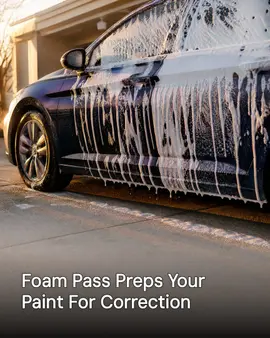
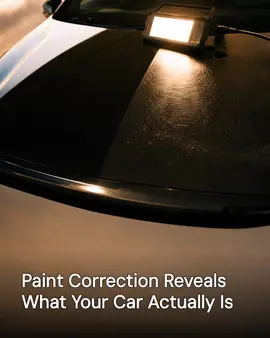
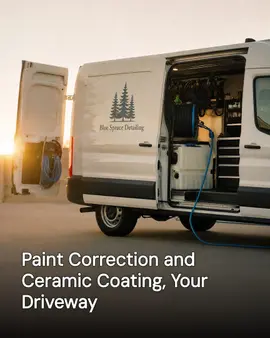
Real generator output for Blue Spruce Detailing, a demo brand we built ourselves to show a trade we have no customer in yet.
Free every week: 3 posts, 1 video, 1 cross-post. No card, no trial clock. Free media carries a small watermark.
Why a detailing business's social media goes quiet
Not a discipline problem. A time-of-day problem.
- An eight-hour correction ends with the client driving off and the only proof sitting unposted in your camera roll next to a thousand screenshots.
- Mobile weeks are driveways, hose reels, and a route with no slack in it. The account goes quiet in the exact season you are busiest.
- The content everyone watches is the content you never post, because editing and captioning eat whatever is left of the evening after polishing.
- Customers have heard of ceramic coating, do not know what it does, and price-shop it. The explaining falls on you, one consult at a time.
What it does for a detailing business
Shipped features, described the way they land for your week.
The website does the onboarding
Give it your web address and it imports the services you list, your colors, and the photos already on the site. If you sell correction and coating packages, the drafts start there instead of at wash-and-wax boilerplate.
The free week of posts
Each week the free plan drafts three image posts, one short video, and one cross-post. For a detailer that could be a half-corrected panel, a clip of foam coming off a wheel, and a cross-post walking through what a full interior actually includes.
Captions in your shop's voice
A solo operator working out of a van and a ceramic studio with a lighting rig write like different businesses because they are. Your brand kit records how you talk about your own work, and each network gets a caption written for it rather than one paragraph pasted everywhere.
Built from your camera roll
Generated images are built around your uploads: the fifty-fifty hood, the beading shot, the extractor bucket. In this trade the camera roll is already full; the tool's job is turning what is on it into media sized and finished for each network.
The queue is the plate check
Every draft waits for you. That pause is where a visible plate gets caught, a caption promising the wrong turnaround gets fixed, and a post about a car still in the bay gets pushed to Friday. Edit, swap media, reschedule, or reject; nothing goes out by itself unless you have deliberately switched autopilot on.
Feeds for reach, the map for bookings
Connect Instagram, Facebook, LinkedIn, X (Twitter), TikTok, YouTube, Threads, Pinterest, Bluesky, Google Business Profile, and WordPress. Detailing gets discovered on the short-video feeds, but the person ready to book is searching the map listing, and both get fed from the same queue.
How to run a detailing business's social media
Most trades have to go looking for content. Detailing produces it as a byproduct: foam on glass, grey water in a bucket, paint pulled back to gloss. The steps below are about capturing that without slowing the job down, and posting it without giving up your nights.
What you need
- A phone mount or small tripod that lives in the bay or the van, so filming costs zero hands.
- One panel's worth of strong light, a work lamp is enough, aimed low across the paint.
- A habit of masking plates and checking reflections for faces before anything uploads.
- A one-line note per job about what the car needed, because that line becomes the caption.
Film the process, not just the result
Foam sliding down glass, an extractor pulling grey water out of a seat, clay picking up what the eye cannot see. Detailing is one of the few trades whose process footage strangers watch for its own sake, and the locals who might actually book are scrolling the same feeds.
Stop mid-panel for the fifty-fifty
The fifty-fifty is the trade's signature frame for a reason: one hood, half corrected, half still swirled, under the same light. Stop mid-panel and shoot it. No separate before-and-after pair argues the case as cleanly as a single photo that contains both halves.
Split the feed the way you split the work
A mobile detailer's content is the driveway, the van build, the water tank, and the generator; a shop's is the lighting, the booth, and the finish work a controlled space allows. Post the setting you actually work in, because the customer is also choosing between coming to you and having you come to them, and the feed answers that before anyone asks.
Explain ceramic coating without the chemistry
Skip the hardness ratings and the bond talk. Show water beading on a coated panel next to a bare one, say what washing changes afterward, and be plain about the hours the application takes. Coating sells as a demonstration, and a demonstration is something you can film on your own test panel.
Start interiors at their worst
Crumbs in the seat rails, the cup holder nobody mentions at drop-off, the aftermath of a child seat. The rough before is what makes the clean after mean anything, and interiors are where owners most doubt the price. Ask the owner before posting their mess, and leave out anything with mail or an address in frame.
Caption with what the paint needed, not what you sell
Two-stage correction because the last owner washed with a dish sponge; an enzyme pass because coffee sat in the carpet for a month. A caption naming the specific problem reads like expertise, while a caption listing packages reads like a flyer. The one-line note you made at the job is most of the writing.
Common mistakes
- Shooting the finished car in flat shade. Low light raked across the paint is what makes correction visible.
- Posting only finished cars. Without the rough half of the story, a run of glossy panels reads like stock photography.
- Captioning in product names. Customers do not know your compound brand, and the name tells them nothing about their own car.
- Batching a month of clips for one edit night that never comes. Post the week you did the work.
- Selling coating with hardness ratings instead of footage of water behaving differently on a coated panel.
What the free plan gives a detailing business
One campaign a week, generated and scheduled, with no card and no trial clock. Media on the free plan carries a small watermark; paid plans remove it.
- 3 image posts
- 1 short video
- 1 cross-post
- 300 credits a month
Questions car detailers ask
What do detailing customers actually want to see?
The process. Foam, clay, extraction, polish trails under a work light, and then the finished panel. You give SpeedRun the clip or photo and a line about the job; it writes the captions, builds the media around your shots, and schedules the week for your approval.
Do I need permission to post customers' cars?
Ask at drop-off and note the answer. Either way, keep plates, mail, and anything personal inside the car out of frame, and use the approval queue as the second check before a post goes out. A tight shot of a panel rarely identifies anyone; a driveway wide shot can.
Can it write ceramic coating posts without overclaiming?
It drafts from the services on your website and the tone in your brand kit, and you read every caption before it publishes. If a draft reaches past what you are comfortable promising about a coating, you edit it in the queue, and nothing goes out on its own unless you turn on autopilot.
Does it connect to Urable, Mobile Tech RZ, or my booking app?
No. SpeedRun Social does not connect to Urable, Mobile Tech RZ, or any detailing booking software. It reads your website once at setup and works from your uploaded photos and brand kit. Your schedule stays in your booking app; your posts live here.
I detail out of a van. Is there enough to post without a shop?
A mobile setup is its own content: the van build, the water and power you carry, the driveway turnarounds. The weekly drafts are built from whatever you shoot, and a fifty-fifty taken on a driveway reads just as well as one taken in a booth.
What is free, exactly?
The free plan costs nothing and does not ask for a card. It includes 300 credits a month and one free campaign a week, and media generated on the free plan carries a small watermark. Paid plans add credits and remove the watermark, and you can cancel any time.
Part of
Social media automation for service businesses
social media post ideas for car detailers
best social media tools for car detailing, ranked
New to the tools themselves? AI social media posting for car detailers, explained covers what the category costs and where it stops.
Also built for
- Social media marketing for barbers
- Social media marketing for restaurants
- Social media marketing for plumbers
- Social media marketing for landscapers
- Social media posts for dentists
- Social media marketing for roofers
- Social media posts for countertop shops
- Social media for real estate agents
- Social media marketing for hvac pros
- Social media marketing for electricians
- Social media post ideas for gyms
- Social media for cleaning businesses
- Social media posts for hair salons
- Social media marketing for med spas
- Social media marketing for auto repair
- Social media marketing for law firms
- Social media marketing for pest control
- Social media marketing for veterinarians
- Social media ideas for nail salons
- Social media for nonprofits
- Social media for photographers
- Social media marketing for chiropractors
- Social media for general contractors
- Social media posts for painters
- Social media for accountants
- Social media ideas for coffee shops
- Social media marketing for tattoo studios
- Social media for bars and breweries
- Social media content for bakeries
- Social media marketing for yoga studios
- Social Media for personal trainers
- Social media marketing for pet groomers
- Social media posts for florists
- Social media for boutiques
- How SpeedRun Social works
Post the work the bay already filmed
Connect your website, upload the clips off your phone, and read every caption before it goes out. The free plan takes no card.