For countertop shops
Social media posts for countertop shops
A countertop shop wins social media with the same thing that sells slabs: real movement in real stone. SpeedRun Social takes photos from your showroom and your installs, writes a caption for each network, generates the video, and queues the week. Nobody chooses a countertop from a price list. Free every week.
No account, no email, no card. One post from your own website.

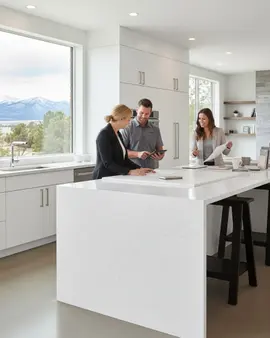
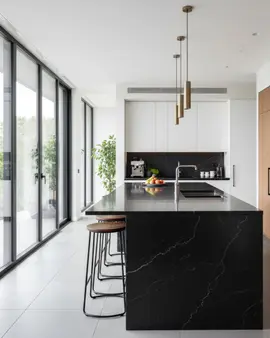
Real generator output from the founder's own countertop business, not a paying customer. Same pipeline we sell, running on a business we know from the inside.
Free every week: 3 posts, 1 video, 1 cross-post. No card, no trial clock. Free media carries a small watermark.
Why a countertop shop's social media goes quiet
Not a discipline problem. A time-of-day problem.
- The product only exists once it is installed in somebody's kitchen, which is the one place you cannot linger with a camera.
- A slab that reads beautifully under showroom lights photographs flat on a phone.
- The fabrication shop is the most interesting room in the business and nobody has ever filmed it.
- Every competitor page in the market is the same few white quartz kitchens.
- A homeowner spends weeks choosing stone, and the shop that showed them the most stone usually gets the job.
What it does for a countertop shop
Shipped features, described the way they land for your week.
Setup reads your shop's site
Point SpeedRun at your web address and it imports your business details, your colors, and the materials you list, so the drafts name quartz, quartzite, and soapstone rather than talking about surfaces.
A free campaign every week
Three image posts, one short video, and one cross-post per week at no cost. In shop terms: a slab off the rack, a finished install, a clip from the saw, and a cross-post with room to walk through edge profiles side by side.
A remnant yard and a design-led showroom do not sound alike
Tone, reading level, and the words you use for your own materials come out of your brand kit rather than a template, and every network gets its own caption instead of one block pasted across all of them.
Images built on your slabs
Generated images are built around the photos you give it: the rack in your warehouse, a finished island, your logo and colors. Setup can also pull the project photography already sitting on your site.
You sign off before a customer's kitchen goes public
Posts wait in an approval queue. Fix a stone name, swap in a better angle, hold a post until the homeowner has moved in, or reject it. Nothing publishes on its own unless you turn on autopilot.
One schedule across the accounts that matter here
Connect Instagram, Facebook, LinkedIn, X (Twitter), TikTok, YouTube, Threads, Pinterest, Bluesky, Google Business Profile, and WordPress. Instagram and Pinterest are where people plan kitchens, Google Business Profile is where they look for a fabricator nearby, and one schedule handles all of them.
How to run a countertop shop's social media
The material is the whole argument, so nearly all of this is about photographing stone properly rather than about writing.
What you need
- A spray bottle and a rag at the slab rack.
- Room to stand back far enough to get a whole slab in frame.
- A yes from the homeowner before an installed kitchen goes on the page, asked at template.
- Your stone names spelled the way the quarry spells them.
Shoot the slab wet
A dry slab photographs grey and dusty. Wiping it down brings back the movement, the depth, and the colour the customer will actually get, which is the thing they came in to see. Almost every good stone photograph anywhere is a wet slab.
Put something in frame for scale
A close photograph of granite is an abstract pattern. A hand, a tape, or a sample tile at the edge of the shot tells a reader whether the veining is the width of a finger or the width of an arm, and that is what they are trying to work out.
Film the saw
The bridge saw and the CNC are the reason a fabricator exists, and hardly anyone in the trade posts them. Half a minute of a sink cutout being cut beats any finished kitchen, because it is the part of the process no customer has ever been allowed to watch.
Photograph a seam you are proud of
Seam placement is where fabricators separate from each other, and it is invisible in a wide kitchen shot. A close photo along a finished seam, with the pattern carried across it, is a claim about workmanship a reader can check with their own eyes.
Show the edge profiles as a set
Eased, bullnose, mitred, waterfall. A homeowner cannot picture any of them from the name and gets asked to pick one anyway. Photographing your own profiles in one stone, side by side, answers a question that eats time in every consultation you run.
Post the remnant rack
Small jobs pay the bills between kitchens, and the people who need a vanity top or a fireplace surround never think to ask whether you do them. A photo of what is on the rack this week turns leftover material into a reason to walk in.
Common mistakes
- White quartz only. It sells well, and it makes every shop's page look like every other shop's page.
- Photographing a finished install with the client's post and mail still on the counter.
- Calling a stone whatever your supplier's invoice calls it, so nobody can search for it afterwards.
- Showing only finished kitchens, when the shop floor is the one thing your competitors are not showing.
What the free plan gives a countertop shop
One campaign a week, generated and scheduled, with no card and no trial clock. Media on the free plan carries a small watermark; paid plans remove it.
- 3 image posts
- 1 short video
- 1 cross-post
- 300 credits a month
Questions countertop shops ask
Our work all ends up in customers' homes. What are we supposed to post?
The material and the making of it. Slabs coming off the truck, the rack after a delivery, the saw running, a seam, an edge profile, a remnant. All of that is in your building and none of it needs a customer's permission, which makes it the content you can actually keep up.
Our slabs look better in person than in any photo. Can this help?
Partly. Wiping a slab down before you shoot it closes most of the gap, and that is a habit rather than a product feature. What SpeedRun does with the photo you take is write the caption, build the post, and put it on a schedule.
Do we have to put prices in the posts?
No, and nothing here fills a price in for you. Whatever you want said about pricing goes in your brand kit or gets edited into a caption, and every post passes through your approval queue before it publishes.
We do commercial work as well as residential kitchens.
Both go in the brand kit as services, and you can steer any individual post by editing the caption. A hotel lobby job and a family kitchen are different arguments, and they read as different posts.
What does it cost to try?
The free plan costs nothing and does not ask for a card. It includes 300 credits a month and one free campaign a week, and media generated on the free plan carries a small watermark. Paid plans add credits and remove the watermark, and you can cancel any time.
Part of
Social media automation for service businesses
social media post ideas for countertop shops
best social media tools for countertop fabricators, ranked
New to the tools themselves? AI social media posting for countertop shops, explained covers what the category costs and where it stops.
Also built for
- Social media marketing for barbers
- Social media marketing for restaurants
- Social media marketing for plumbers
- Social media marketing for landscapers
- Social media posts for dentists
- Social media marketing for roofers
- Social media for real estate agents
- Social media marketing for hvac pros
- Social media marketing for electricians
- Social media post ideas for gyms
- Social media for cleaning businesses
- Social media posts for hair salons
- Social media marketing for med spas
- Social media marketing for auto repair
- Social media marketing for law firms
- Social media marketing for pest control
- Social media marketing for veterinarians
- Social media ideas for nail salons
- Social media for nonprofits
- Social media for photographers
- Social media marketing for chiropractors
- Social media for general contractors
- Social media posts for painters
- Social media for accountants
- Social media ideas for coffee shops
- Social media posts for car detailers
- Social media marketing for tattoo studios
- Social media for bars and breweries
- Social media content for bakeries
- Social media marketing for yoga studios
- Social Media for personal trainers
- Social media marketing for pet groomers
- Social media posts for florists
- Social media for boutiques
- How SpeedRun Social works
See a week built from your own slabs
Connect your site, upload a handful of install photos, and read what it drafts before you commit to anything. There is nothing to pay up front.